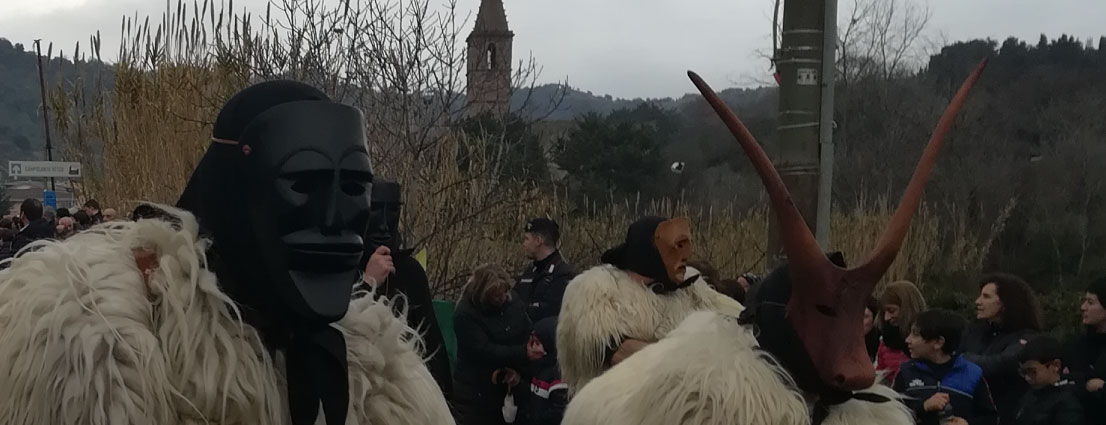
The Carnival of Ottana, Merdules and Boes
The Ottana Carnival, known locally as Carrasegare, is one of Sardinia’s most eagerly awaited and fascinating traditional celebrations. Its roots lie in a centuries-old, perhaps even millennia-old, tradition that has been passed down through the generations and still reflects the community’s deep connection with its cultural heritage.
The main protagonists are the traditional masks, inspired by rural life and livestock farming and rooted in ancient apotropaic rituals intended to ward off evil spirits and encourage the fertility and prosperity of the animals.
The most iconic masks are the Merdùles and Boes, alongside animal figures such as Porcos, Molentes and Crapolos, and emblematic characters such as Sa Filonzana.
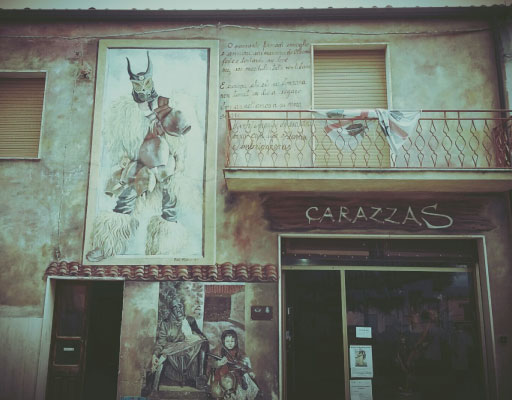
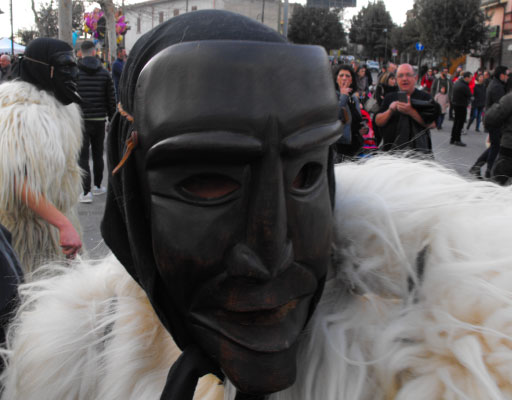
Sos Merdùles
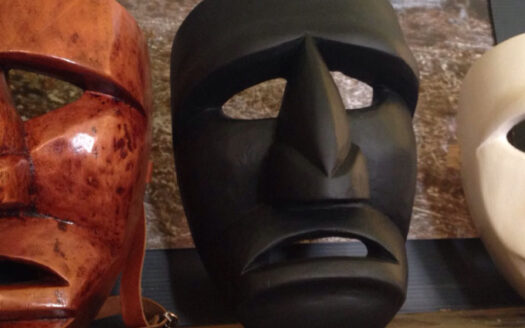
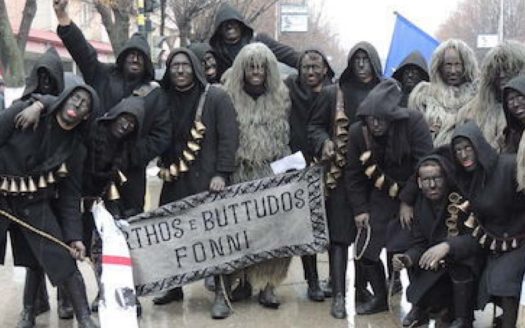
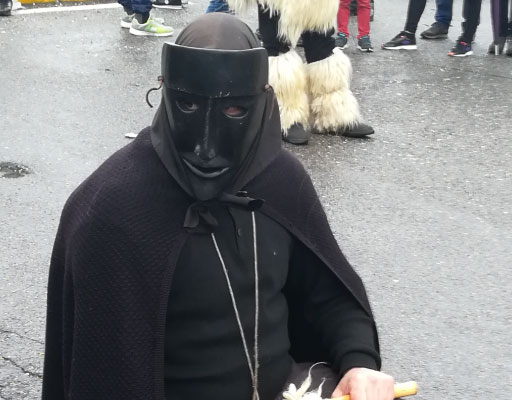
Sos Merdùles represent the farmers and livestock owners. They wear animal skins or traditional garments, while anthropomorphic wooden masks with deliberately distorted features, such as oversized noses, unnatural smiles and grotesque expressions, cover their faces.
A black women’s headscarf covers their heads, while a leather pouch hangs from their shoulders, traditionally used to carry bread, sausage and other provisions. They move with a slow, weary gait, holding the reins that guide Sos Boes in one hand and a staff in the other, used both as a support and to keep the animals under control.
The Merdùles speak, grumble and often call on spectators to keep their distance as “the oxen” approach.
Two figures accompany the procession, playing traditional instruments: S’Orriu, a cork cylinder fitted with a leather membrane and a cord, and Su Pipiolu, a small reed flute.
A second group of Merdùles is made up of men dressed in large shawls and long black skirts, known as the “widows”, while others are dressed as shepherds in worn, weathered clothing.
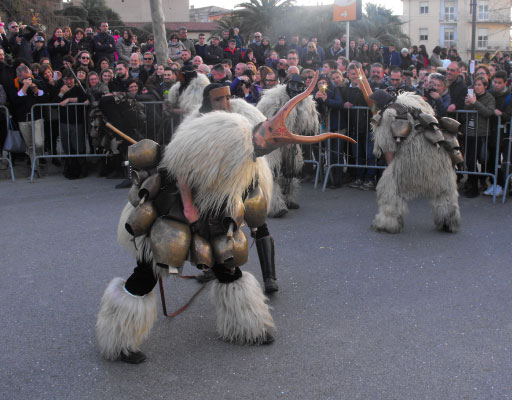
Sos Boes
Sos Boes wear a sleeveless sheepskin jacket over a black or dark-coloured shepherd’s outfit. A leather shoulder strap hangs across their body, from which metal and bronze bells are suspended.
Intricately carved wooden masks, sometimes painted, conceal their faces and reproduce bovine features, with muzzles and horns of varying lengths. The forehead is adorned with stylised auspicious motifs and a star.
Silent and unpredictable, they move with energetic leaps, making their bells ring as they advance. A Merdùle keeps some of them under control, but they occasionally rebel, throwing themselves to the ground or charging into the crowd.
More rarely, Sos Porcos and Sos Molentes also take part in the procession, representing the pig and the donkey, respectively, together with Su Cherbu (the deer) and Su Crappolu (the roe deer).
Another characteristic mask is Sa Filonzana (the spinner), portrayed by a man dressed as a widow, with a hump and his face hidden behind a wooden mask or, more rarely, covered in soot. Holding a spindle and distaff, with a pair of scissors hanging around his neck, she represents a kind of Fate of human life. As she spins wool, a symbol of life, she foretells the future, which may be prosperous or unfortunate depending on the wine offered to her.
Sas Mascaras Serias, on the other hand, represent the most spontaneous form of masquerading. Men and women of all ages parade through the streets, jumping and dancing in deliberately unusual and eccentric costumes: old clothes, sheets, bedspreads, and scraps of fabric to conceal their faces.
When does the Ottana Carnival begin?
Although Ottana Carnival is traditionally celebrated on the Sunday, Monday and Tuesday before Ash Wednesday, the festivities actually begin on the evening of 16 January, with the celebration of Saint Anthony Abbot.
After the religious service and the blessing of the bonfire, the masks make their first appearance and gather around the fire.
On this occasion, the priest hands over to the community S’Affuente’, an ancient repoussé-worked copper dish decorated with bunches of grapes, flowers, Eastern-inspired crosses and an inscription in Alemannic script. Probably of Byzantine origin, the dish is struck with an iron key, producing a distinctive metallic sound. This dish thus becomes the instrument that sets the rhythm for the traditional Ballu de S’Affuente.
During the Holy Week rituals in Ottana they use the same dish.
On Carnival Sunday, the traditional dressing of the masks takes place, followed by their procession through the streets of the village. In a lively and playful atmosphere, some of the masked figures “capture” spectators and jokingly ask them for a drink. On Shrove Tuesday, known as Sa Die de su Cumbidu, the roles are reversed: it is the masks who offer drinks to the people taking part in the celebrations.
The procession is accompanied by a rich programme of cultural events and traditional food experiences, attracting visitors, Carnival enthusiasts and curious travellers from all over Sardinia and beyond.