Traditional Masks of Fonni - Mascheras Limpias, Urthos, and Buttudos
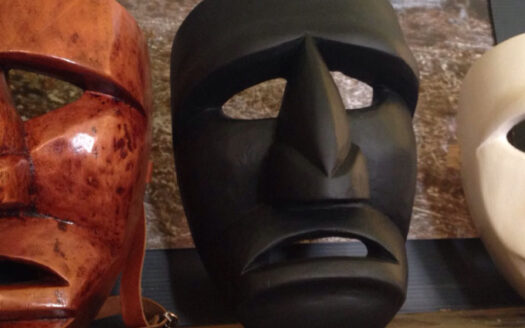
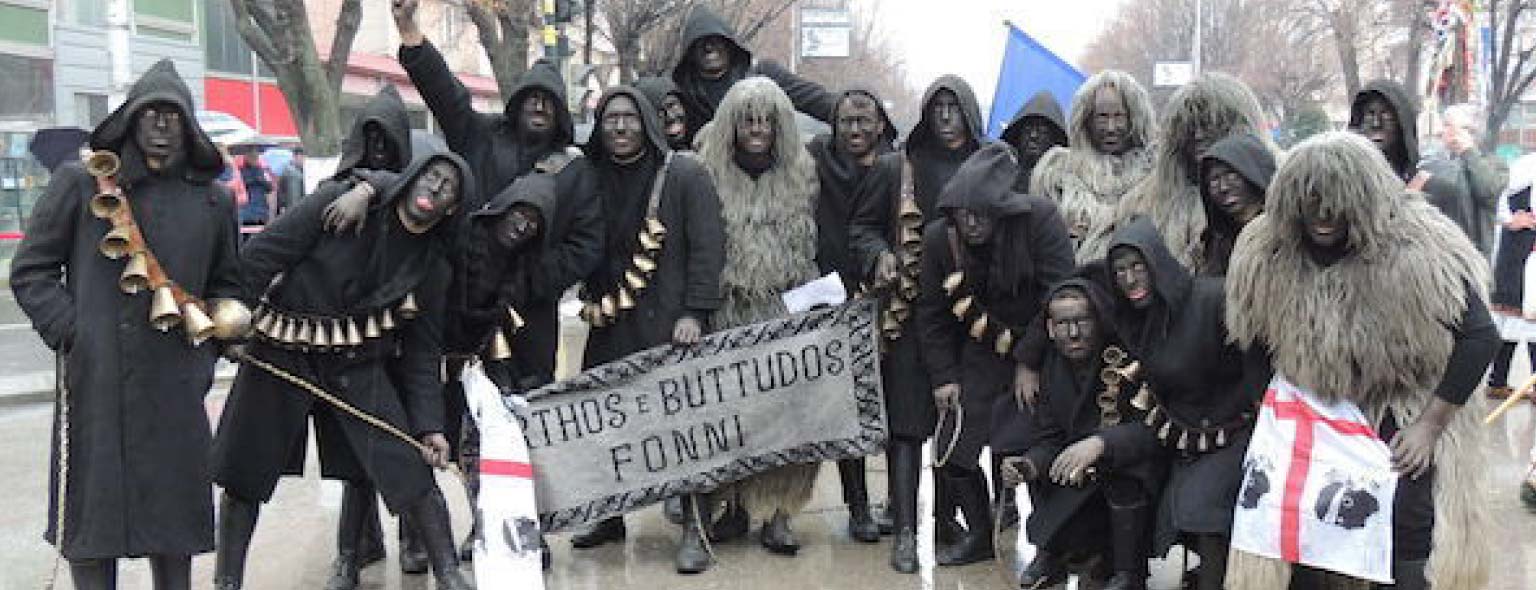
Fonni Carnival is marked by the ancient masks of S’Urthu and Sos Buttudos, which embody the eternal struggle between humankind and the forces of nature.
S’Urthu
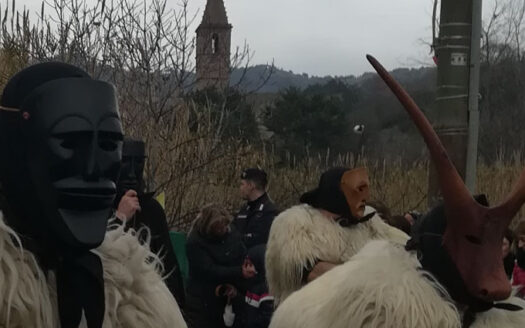
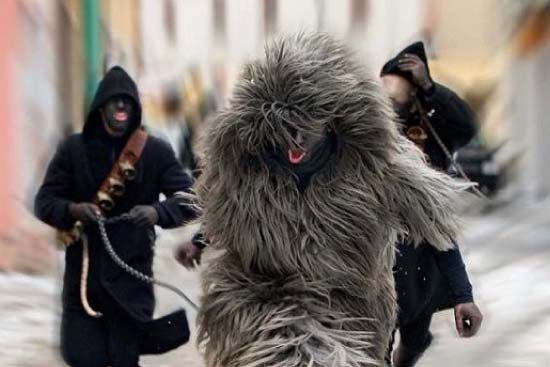
S’Urthu represents the animal: the bear. He is dressed in white or black sheepskin or goatskin, with a large cowbell around his neck. His face is blackened with charred cork (s’inthiveddu), and he is held on a leash attached to a rattling iron chain.
S’Urthu struggles relentlessly to break free. He lashes out at people and objects along his path and climbs onto anything he can reach, from trees to balconies. He then throws himself into the crowd, singling out women in particular and playfully subjecting them to his exuberant antics. Meanwhile, Sos Buttudos try to hold him back and tame him.
Sos Buttudos
Sos Buttudos, by contrast, are the men who keep S’Urthu in check. They wear an orbace woollen coat over velvet clothing, with sturdy boots and leather gaiters. Heavy bells, known as sonaggias, are worn across their shoulders, adding to the powerful and unmistakable sound of the procession.
Sas Mascheras Limpias
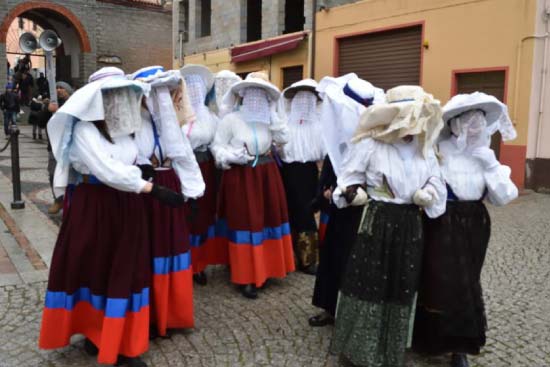
Another distinctive feature of Fonni Carnival is Sas Mascheras Limpias (“clean masks”), portrayed by both men and women. In stark contrast to the Mascheras Bruttas (“dirty masks”), they represent elegance, beauty and goodness.
They wear elements of the traditional women’s costume of Fonni: su vardellinu, the skirt; sa amiscedda, the underskirt; and sa amiscia, the white blouse. Their heads are adorned with a straw or cardboard hat covered with embroidered tablecloths and decorated with colourful ribbons known as sos vroccos. A veil, sa vacciola, conceals the face.
To preserve their anonymity, the Mascheras Limpias never speak and even wear gloves. Led by su portadore (the guardian), they parade through the streets to the sound of the accordion, performing the traditional Fonni dance.