





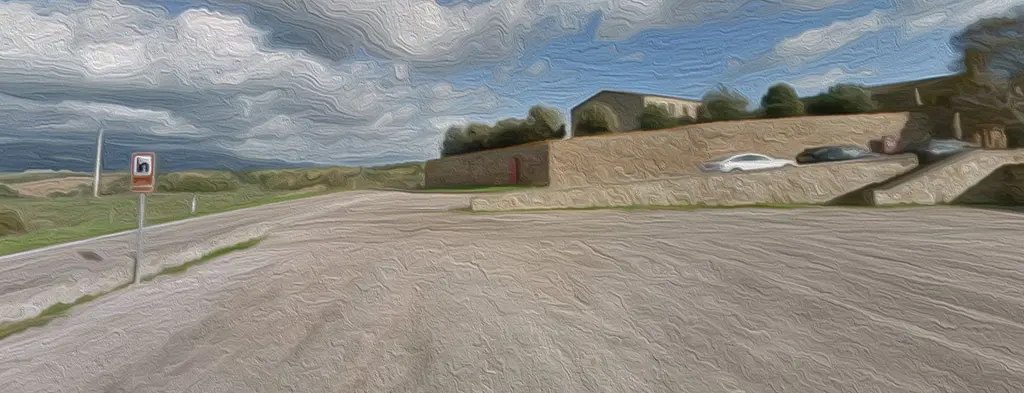
Oschiri, a medieval village on the remains of the Roman fortification of Castrum
This characteristic charming village is in a splendid setting, between the Limbara massif and Lake Coghinas, one of the most ‘Romanized’ areas of Sardinia. Oschiri in the province of Gallura Nord-Est Sardegna is 280 m. above sea in a territory that is morphologically quite various, with heights up to 1,023 m.
Traditional activities and tourism potential
In an area of livestock farming and viticulture, Oschiri remains essentially a village of farmers and stockbreeders, with some developing in the food and dairy industry. Nevertheless, the quite recent discovery of tourist potential of the area has resulted in a good variety of options for restaurants and accommodation.
Gastronomy products
Noteworthy in the field of gastronomy, besides the bread “carasau” and the genuine “pecorino cheese”, is the typical dish of the village, “sa panada” (baskets of pasta stuffed with meat and herbs). The municipality and the producers, in fact, organize the “sagra of panada” in late August.
a village with an ancient history
The several archaeological findings around the village are evidence of the human presence in the territory since the Nuragic age. Must-see, if you want to dive into the magical world of our ancestors, is the rocky altar, which is located in front of the church of S. Stefano, in a grove north of Oschiri.
Oschiri was founded in the middle Ages on the ruins of the Roman fortress of Castrum and the medieval village of Oppidum Octi.
Various Romanesque churches attest to its ancient origins, and several of them, located just outside Oschiri, are well worth a visit. Among these, we find the Church of St. Demetrius (1158), as well as the medieval churches of Our Lady of Castro and Our Lady of Otti, both of which once belonged to now-vanished villages.
narrow streets in the old centre
The village centre, an interesting destination for those interested in architectural history, is characterized by narrow streets—some still paved with stone—and large, low houses built from local stone. The setting reflects its historical character without excess. Several buildings still feature Gothic-Aragonese style windows, with elegant monolithic cornices and carved lintels above their entrance doors, offering a glimpse of the craftsmanship of the past.
natural beauties
Nature lovers cannot fail to visit two beautiful examples of unspoiled nature: the area of reforestation Su Filigosu and the wild area of the slopes of Mount Limbara.
On foot or by bike visitors of Su Filigosu will discover wildlife typical of the area, rich in various species of mushrooms, and scattered with archaeological remains of prehistoric times. Domus de Janas, Dolmen, Tombs of the Giants and nuraghi are moreover all in a good state and accessible.
Another interesting area is around the river Coghinas, the Thermos of the Romans and the third longest river in Sardinia. The river originates in Bolotana and flows from south to north for some 123 km to the Gulf of Asinara.
the artificial lake of Coghinas
You can enjoy boating, fishing and water sports in this lake, while its coasts are a real attraction for bird watchers. Moreover, you also find along the coasts the necropolis of Pedredu and the centre of Pianas Sa Murighessa. Here, on a high hilltop at the foot of the Mount Limbara, the church of San Leonardo belonged to the disappeared village Golianuti.
The power station in the artificial lake on the river Coghinas, which belongs to Oschiri, began working in 1937, and was the first station in cave in Italy.