Monte d’Accoddi, Sardinia’s Mysterious Prehistoric Sanctuary
Terraced Altar
One of the island’s most unusual prehistoric sites, the fascinating archaeological complex of Monte d’Accoddi, lies just a few kilometres from Sassari, in northern Sardinia.
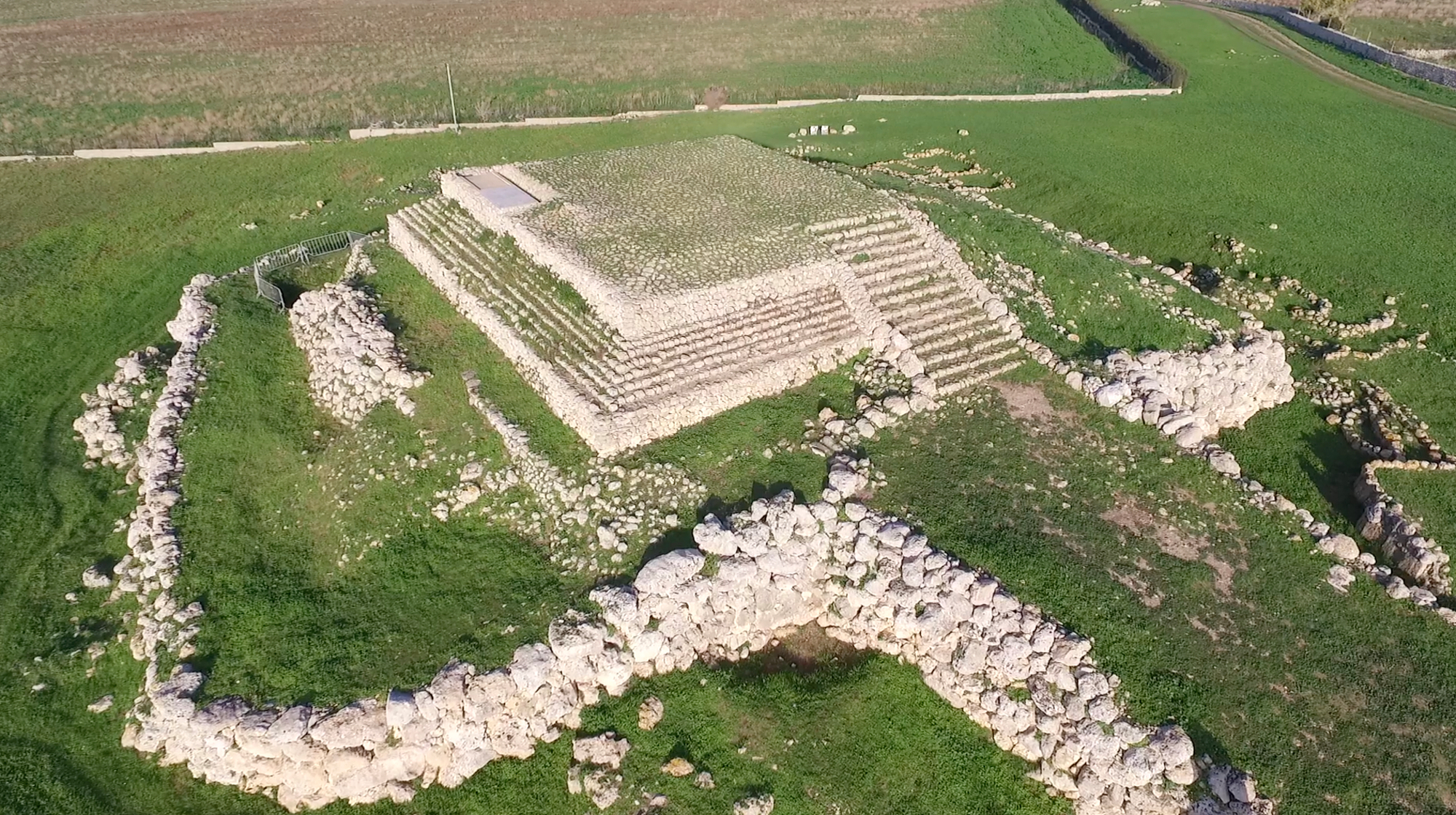
The older sanctuary, known as the Terrace Altar, consisted of a large raised structure with a temple at the top, reached thrpugh a 25-metre-long ramp. At the summit stood a rectangular chamber with painted surfaces. Today, only the floor and fragments of the surrounding walls remain.
or “Red Temple”
This first temple was built between the 4th and 3rd millennia BC and was originally covered with plaster containing red ochre. This distinctive feature gave it the name “Red Temple.” The striking colour may have enhanced the monument’s solemn appearance and was probably connected to its ritual and symbolic function.
The Rise of the Stepped Temple
Around two centuries later, the sanctuary underwent a major transformation. The original structure was partly filled in, creating a much larger truncated-pyramid-shaped platform.
The new sanctuary was reached through a ramp more than 40 metres long, built over the earlier one. Known as the “Stepped Temple,” this second structure is what makes Monte d’Accoddi unique within the European archaeological landscape.
A Prehistoric Village
The history of Monte d’Accoddi goes back much further than its monumental sanctuaries.
Archaeological excavations, which began in 1952, have revealed the different phases of occupation, from the earliest circular Neolithic huts to a large settlement of rectangular dwellings.
One of the most remarkable structures is the so-called “Witch Doctor’s Hut,” a building divided into several rooms that reflects the complexity of the settlement.
Mother Goddess Cult
The excavations have uncovered numerous artefacts, including fragments of figurines and two carved stone stelae, interpreted as evidence of a Mother Goddess cult.
These finds suggest a religious tradition connected with fertility, nature and the cycles of life.
The site was gradually abandoned during the Early Bronze Age and was later used occasionally for burials, as demonstrated by archaeological remains found in the area.
An Echo of the Mesopotamian Ziggurats
People have often compared the unusual architecture of Monte d’Accoddi with the famous Mesopotamian ziggurats, monumental stepped structures associated with the connection between the human and divine worlds.
The comparison is particularly evocative, in fact: at Monte d’Accoddi, too, a long ascending ramp leads from ground level towards an elevated sacred space.
Although the monument has its own distinctive characteristics and there is no evidence of a direct connection with Mesopotamia, the architectural resemblance has contributed greatly to the mystery and fascination surrounding the site.
Legend of King Uruk
Monte d’Accoddi has also inspired a fascinating legend.
According to the story, a Mesopotamian priest king named Uruk commissioned the great pyramid. He is said to have built the temple to protect his village, choosing to dedicate it to the Moon rather than the Sun.
This legend connects so the sanctuary with the ancient tradition of the sacred feminine, associated with the divine aspects of life, birth and death, and with the mysteries surrounding the cycle of existence.
Whatever its historical basis, the story adds another layer to the enigmatic character of Monte d’Accoddi, a place that continues to raise questions about the spirituality and religious practices of prehistoric communities.
A Unique Archaeological Monument
With its overlapping sanctuaries, monumental ramps, settlement remains and ritual artefacts, Monte d’Accoddi represents a remarkable archaeological landmark in Europe.
More than a single monument, it is a place where thousands of years of Sardinian prehistory come together—a site that offers a rare glimpse into the evolving relationship between people, landscape and the sacred.